
Rockcastle County VINE Coverage
Kentucky's Department of Corrections runs VINE. It is a free automated service for victims and concerned citizens. The system gathers custody data from county jails, prisons, mental-health facilities, and juvenile detention centers. A search returns a recorded status. It can also flag events like release, transfer, escape, or an upcoming parole date. State guidance supports VINELink for checking a Rockcastle record. No county-by-county certification exists, so fields can lag and not every booking appears instantly. Check first, then verify. Call the Rockcastle County Detention Center at 606-256-2178 when VINELink shows no match. Do not assume the person is free.
Check a Rockcastle Arrest
Similar names trip up searches, so enter enough identifying detail to tell people apart. An offender or jail ID helps most. A name-only check can return several records. Kentucky's FAQ warns that one arrest can sit in both a local-jail record and a DOC record.
- Open VINELink and select Kentucky.
- Choose “Find an Offender.”
- Enter a full or partial name, or use an offender or jail ID.
- Compare identifiers and custody details before opening a result.
- If both local and DOC records appear, review each relevant record.
- Call the listed facility or Rockcastle jail when the answer matters now.
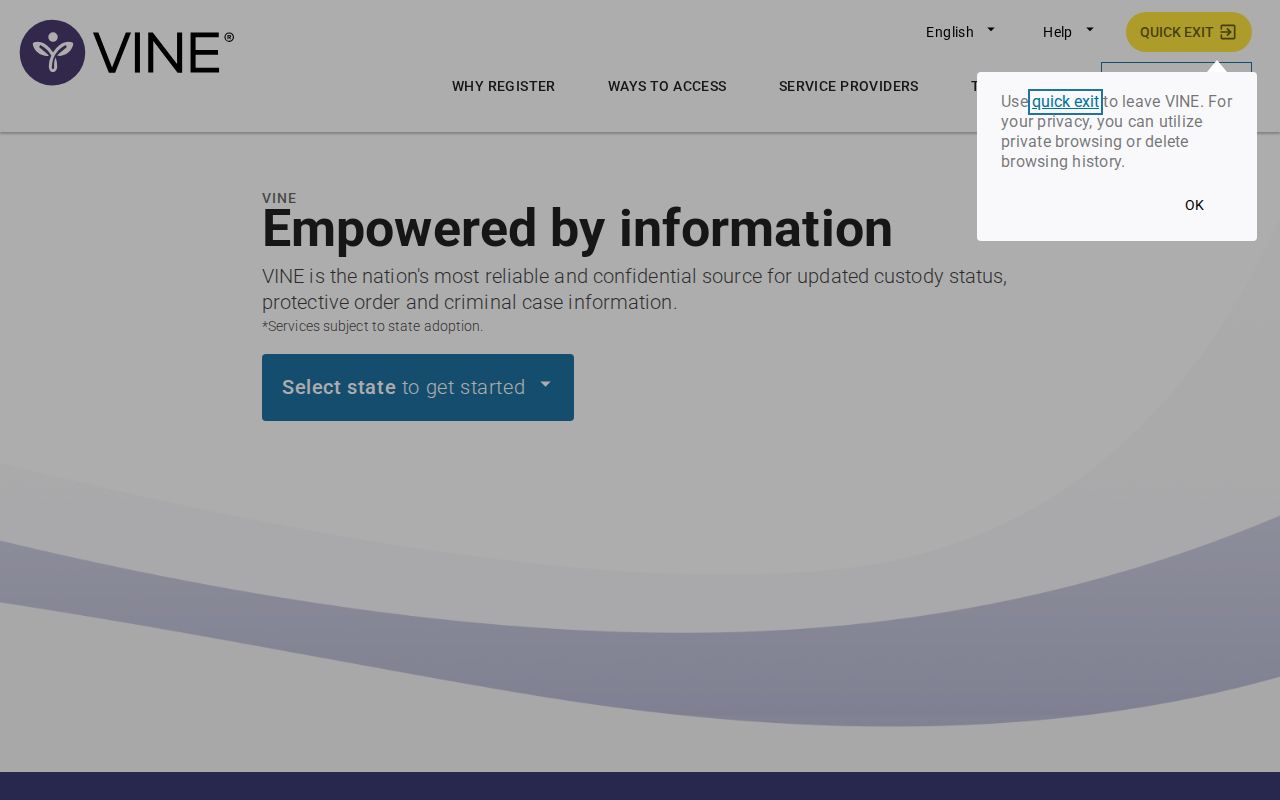
The VINELink search screen is the official access point for the statewide service.

This screen starts a person-specific custody search. It offers no Rockcastle booking gallery and no substitute for a call to the jail.
VINE Arrest Status Fields
Fields vary with the source record. Read each value as a custody-system snapshot, and compare it with the detention center whenever timing or identity matters.
| Possible field | What it means |
|---|---|
| Name and identifiers | Help distinguish similar names |
| Custody status | The status reported by the participating source |
| Facility | The location tied to the current record |
| Offender or jail ID | An identifier for that source record |
| Status event | A recorded release, transfer, escape, or other covered change |
| Notification options | Available registration channels for that record |
The service does not promise a booking photograph. It also skips the final court disposition. A facility change may signal a transfer rather than a release. For what happened to a Rockcastle charge, the Circuit Court Clerk holds the answer.
Register Rockcastle Custody Alerts
An alert request attaches to one specific custody record. Duplicate jail and DOC records need registration on both, per Kentucky's FAQ. The person in custody never learns who signed up.
- Open the correct VINELink result and choose registration.
- Select the available event and phone or email channel.
- For phone notice, create the required four-digit PIN.
- Use a direct number, not a switchboard that cannot enter the PIN.
- When a call arrives, enter the PIN to acknowledge it.
- Keep the jail number available as a separate verification route.
Kentucky repeats calls when a phone notice goes unacknowledged during the notification window. Never treat one alert as a whole safety plan. Phone 911 in an emergency, and begin enrollment through the official VINELink registration route.
This screen covers alert registration, which stays separate from a search and from a Rockcastle booking-record request.
Rockcastle VINE Limits
VINE data can lag. A fresh intake or a source-system change may not appear right away, and Rockcastle has no live official roster to serve as a perfect second screen. For an arrest processed today, use the Rockcastle same-day check and call the detention center. Written records come from the jailer or the arresting agency. Case outcomes come from the clerk. Federal custody is another matter. The Bureau of Prisons, ICE, and the Marshals do not always feed Kentucky VINE, so turn to the federal locator, court, counsel, or facility. KOOL lists only state DOC inmates, not same-day bookings. Together these tools cover different custody levels.
Duplicate Kentucky VINE Records
One person can hold a local-jail record and a separate state DOC record. That does not mean two new arrests. It may reflect a move from county custody into the state system, or two source entries with different identifiers. Match the facility, ID, and status first. Kentucky's guidance says to register on both. One alert can miss the other record. Write down which record you chose, and confirm major changes with the facility.
VINE Versus Rockcastle Court Records
Custody status and case status differ. VINE may report that a person is held, moved, or released. The Rockcastle Circuit Court Clerk answers the case side. That office shows whether charges were filed and the case's later disposition. Release is not dismissal. A case can stay open long after the jail lets someone go. To match the custody record to the right case, use the details. The name, date, agency, and an identifier all help.
Rockcastle VINE Phone Access
No web access is needed. Kentucky VINE takes calls at 1-800-511-1670. The phone route handles custody information and notification registration. Give a number that reaches the registrant directly, since the automated call may ask for a four-digit PIN. Keep the PIN private but handy. Kentucky's callback repeats calls until the notice is acknowledged. A switchboard may fail to confirm delivery, so verify any time-sensitive release or transfer with the responsible facility.
Rockcastle Custody Record Boundaries
VINELink answers one question: where a person is in custody right now. It does not hand over the jail register, an arrest report, or a citation. There is no booking photo or court judgment either. Those records live elsewhere. The detention center keeps its own intake and discharge material. The agency that made the arrest holds the report it wrote. That could be the sheriff, city police, or KSP. The clerk holds the filed case.
So a single source rarely tells the whole story. VINE may list a facility and a status with no police narrative behind it. A jail record can show release while the court case is still open. Match the record to the question you are asking. Then compare names, dates, agencies, and identifiers across them.
Rockcastle VINE Status Changes
A release notice has a narrow meaning. It tells you the custody source logged a release event. It does not say why, and it does not decide the charge. Bond, a court order, time served, or transfer processing could all be behind it. Call the facility for current status. Let the clerk's record settle the legal outcome.
Treat a transfer notice the same way. The person may have moved to another jail, a state facility, or another participating institution. Write down the destination if one shows. If Kentucky DOC takes custody, KOOL can help once the state record posts, though it updates on its own schedule and says nothing about a fresh Rockcastle booking.
An escape alert is urgent information, not an invitation. Never approach anyone based on it. Follow official safety instructions and call emergency services for an immediate threat. VINE notifies. It does not respond.
No Rockcastle VINE Match
A failed search is not the end of the road. The name may be spelled differently in the system. The intake may be too new. The source may lag, or the person may sit in a system outside Kentucky VINE. Try a partial name or a known jail identifier. Also watch for a duplicate local or DOC record.
Next, call the Rockcastle County Detention Center with just enough detail to separate the person from same-name matches. Ask about current custody, the booking date, the lodging agency, and release or transfer status. If the person was never lodged there, go to the arresting agency instead. Federal custody is a different track. Use the federal locator rather than reading silence from VINE as proof of release.
Want a record rather than live status? Ask the jailer or the agency directly, and keep the request narrow. VINE does not archive every public detail. A person can drop out of a custody search while a jail register entry and a court case still exist.
Keep the VINE result open while you call. Quote the identifier and facility on the screen. Ask staff to confirm custody, not to interpret the charge. If the person moved, ask which agency or institution received them. Then update your alert registration if a second record appears. That short loop cuts down mistakes. It guards against same-name hits, stale status text, and moves between local and state systems.